
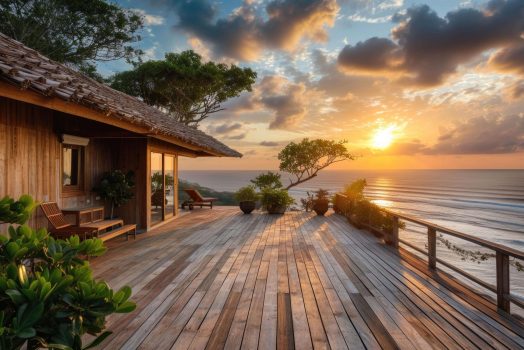
Imagine you’re sitting on your Long Beach Island (LBI) deck on a perfectly warm spring morning, coffee in hand, watching the sun dance across Barnegat Bay. Your deck is the heart of your coastal lifestyle, the place where family barbecues, evening sunsets, and summer memories are made.
But as you look down at the weathered boards beneath your feet, you’re reminded of the culprit: salt air, high humidity, intense UV rays, and stormy weather, all of which beat relentlessly against decks on the Jersey Shore.
Every LBI homeowner faces this crucial decision: “Should I paint or stain my deck?”
While both finishes protect your investment, the choice involves longevity, maintenance, cost, and the deck’s ability to withstand coastal conditions. When it comes to deck protection on the Jersey Shore, one size definitely doesn’t fit all.
This guide will walk you through the decision with the expertise that only comes from understanding our unique coastal environment, helping you choose the best deck finish and enjoy years of worry-free outdoor living.

The Coastal Climate Factor: Why Long Beach Island is Different
Did you know that Inland towns like Freehold or Princeton don’t have to fight the same environmental battles that decks in LBI do? Before we dive into paint versus stain, you need to understand what makes Long Beach Island deck maintenance uniquely challenging:
Salt Air is Your Deck’s Biggest Enemy
That ocean breeze you love carries microscopic salt crystals that settle into every pore of your deck’s wood and finish. Over time, this salt draws moisture, accelerating coating breakdown and causing dramatic wood expansion and contraction.
UV Exposure on LBI is Intense
With water on multiple sides reflecting sunlight, plus minimal tree cover on most properties, your deck receives UV bombardment from multiple angles.
The stronger and more direct sun doesn’t just fade or bleach colors, it breaks down the lignin in wood fibers (the protective coatings), causing that familiar gray, weathered look that screams “maintenance neglect.”
Wind-driven Sand Acts Like Natural Sandpaper
During storms and high winds, airborne sand particles scour deck surfaces like sandpaper, gradually wearing away protective finishes and creating microscopic scratches that allow moisture penetration.
Constant Humidity Can Cause Mold, Mildew, or Wood Rot
Humidity levels consistently run 10-20% higher than inland Ocean County areas. This constant moisture creates perfect conditions for mold, mildew, and even wood rot if your finish isn’t up to the challenge.

Deck Painting: When Solid Coverage Makes Sense
Let’s start with painting, which offers the most dramatic transformation potential for your coastal deck. It’s often seen as the “stronger armor” for decks, but it has its quirks, especially in Ocean County’s climate.
Pros of Painting in Coastal Environments
Complete UV protection: High-quality exterior paint creates an opaque barrier blocking virtually all UV rays, which is invaluable for southern or western-facing decks.
Bold color options: Unlimited choices to match your coastal aesthetic, from classic boardwalk gray to trendy blue-grays.
Superior durability against salt: Marine-grade paints resist salt corrosion, ideal for properties within 500 yards of water.
Better resistance to staining from barbecue grease, sunscreen, and the inevitable red wine spill during sunset gatherings.
But Painting is Not all Perfect in Coastal Conditions. Here are the Cons of Painting in Coastal Conditions
Moisture Trapping is paint’s Achilles heel in humid environments. If moisture penetrates small cracks, it causes bubbling, peeling, and wood rot, which is especially problematic on horizontal surfaces.
Peeling & Flaking: LBI’s humidity cycles cause wood expansion/contraction, potentially breaking paint adhesion.
Less Wood Character: Paint hides the grain, which may not suit homeowners who love the natural look of cedar or mahogany.
Complete Surface Preparation is non-negotiable. Any existing finish must be removed entirely, and the wood must be thoroughly clean and dry, which is challenging in our humid climate.
Best Scenarios? Painting Works Best on LBI When:
- Using older, stable hardwoods like mahogany or cedar
- Color coordination is key, or you want bold statements
- Applying to railings and vertical surfaces (less prone to standing water)
- You’re committed to regular maintenance
Note: Many Long Beach Island homeowners choose paint for railings and trim, where coverage and UV resistance matter most, and use stain for deck flooring.

Deck Staining: Working with Coastal Wood’s Natural Character
Deck staining Long Beach Island properties offers a different approach that often better suits our climate challenges.
Why Staining Excels in Coastal Conditions: Deck Staining Pros
Moisture Resistance: Penetrating protection allows quality stains to soak into wood fibers rather than sitting on the surface. This means no film to peel or bubble, even when moisture levels fluctuate dramatically.
Enhances Natural Beauty: Enhanced wood grain creates that authentic coastal look that complements LBI’s natural beauty. Semi-transparent stains let the wood’s rich, organic character show through while providing protection.
Natural wood movement accommodation is stain’s superpower. Stain moves with wood as it expands and contracts, preventing cracking.
Easier Maintenance: When a stained deck shows wear, you can often spot-treat problem areas without obvious patches; power-wash and immediately re-stain.
Stain Limitations in Coastal Environments
- Limited color options compared to paint
- More frequent maintenance is required, especially with transparent stains offering less UV protection.
- Still requires proper surface preparation.
Best Scenarios for Staining in Ocean County
- Cedar, mahogany, or pressure-treated pine decks that benefit from natural grain highlights
- Homeowners who prefer softer, natural coastal looks that blend with dunes and driftwood.
- Situations where easy maintenance is a priority
Pro Tip: In LBI’s climate, solid or semi-transparent stains often work best, offering stronger UV protection while maintaining wood texture.

Longevity & Maintenance: The Real Numbers for Coastal Properties
Let’s talk about what most homeowners care about most: how long before I have to redo this? Here’s what 15 years of exterior painting Ocean County coastal properties has taught us about realistic maintenance expectations:
Paint & Stain Lifespan in LBI
Paint longevity on LBI decks:
- High-quality marine paint: 3-5 years before full recoat
- Standard exterior paint: 2-3 years
- However, peeling may occur sooner on horizontal boards exposed to standing water.
Stain longevity on LBI decks:
- Solid stain: 3-4 years before reapplication
- Semi-transparent stain: 2-3 years, depending on sun exposure
- Transparent stain: 1-2 years, due to coastal weather
- Annual maintenance: Power washing and spot treatment
Maintenance Tips to Extend Finish Life
Monthly inspections during peak season catch problems before they become expensive. Look for areas where water beads poorly. That’s your early warning system.
Immediate spill cleanup prevents staining and finish breakdown. Salt water, sunscreen, and organic materials like leaves can all accelerate coating failure.
Annual power washing removes salt buildup and organic growth. Schedule this for early spring before applying fresh stain or touching up paint.
Proper ventilation around your deck helps moisture dry quickly. Trim back vegetation and ensure good airflow under elevated decks.

Design & Lifestyle Considerations for LBI Living
The right finish choice should complement both your home’s architecture & your lifestyle needs, and also reflect your taste.
Matching Coastal Architectural Styles
- Classic beach cottages often look best with weathered wood stains that enhance the natural, relaxed vibe.
- Modern coastal homes can handle bold painted statements. Think crisp whites or sophisticated grays that echo storm clouds.
- Traditional shingle-style homes pair beautifully with rich, semi-transparent stains that complement cedar shingle siding.
Safety Considerations for Coastal Decks
- Slip resistance becomes critical when sea spray and morning dew regularly coat your deck. Textured paint finishes or stains with anti-slip additives provide better traction.
- Pool deck applications require special consideration. Chlorinated water and constant moisture make solid stains or marine-grade paints typically the better choice.
- HOA guidelines in many LBI communities favor natural wood tones that complement the coastal environment. Check your restrictions before committing to bold colors.

Expert Recommendations: Making the Right Choice for Your Property
After protecting hundreds of coastal decks, here’s when each option makes the most sense:
Choose Paint When:
- Your deck is less than 200 yards from the saltwater
- Your deck is older or has imperfections you want to cover
- You want bold color coordination with your home’s exterior
- You’re willing to invest in premium marine-grade products
Choose Stain When:
- You love natural wood character
- You want lower-maintenance and easier touch-ups
- Your deck has good drainage, but challenging humidity exposure
- Your deck gets heavy sun or pool exposure, where slip resistance matters
Hybrid Approach:
If you want to balance style, function, and longevity, this combo is for you. The hybrid approach often provides the best of both worlds: paint the railings and trim for durability and style impact, while staining the deck boards for easier maintenance and natural beauty.

The Best Deck Finish for Coastal Homes NJ: Your Decision Framework
Decks on Long Beach Island are not just wood; they’re the backdrop of summer memories, family barbecues, and sunsets over the bay. But the same ocean air that makes living here magical also makes deck maintenance essential.
Ultimately, the right choice between paint and stain depends on three key factors: your wood’s condition, your aesthetic preferences, and your maintenance commitment. Whichever you choose, the key is understanding LBI’s unique climate and protecting your investment accordingly.
Ready to choose the best deck finish for your coastal home? Contact Jack Luther Custom Painting & Staining today for a free deck evaluation and color consultation.